Most property websites are good at one thing: showing a list of houses. The hard part is everything that happens after someone taps a listing they like.
We build real estate websites and the AI agents behind them, mostly for agencies and property managers in the Netherlands and Dubai. The same pattern shows up almost every time. The listings look fine. The photos are good. But the inquiry lands in someone's personal inbox, nobody is sure who is following up, and by the time an agent replies the person has already booked a viewing somewhere else.
So this is less about design and more about the path from first click to first viewing. Here is what we think is worth building, in the order we usually build it.
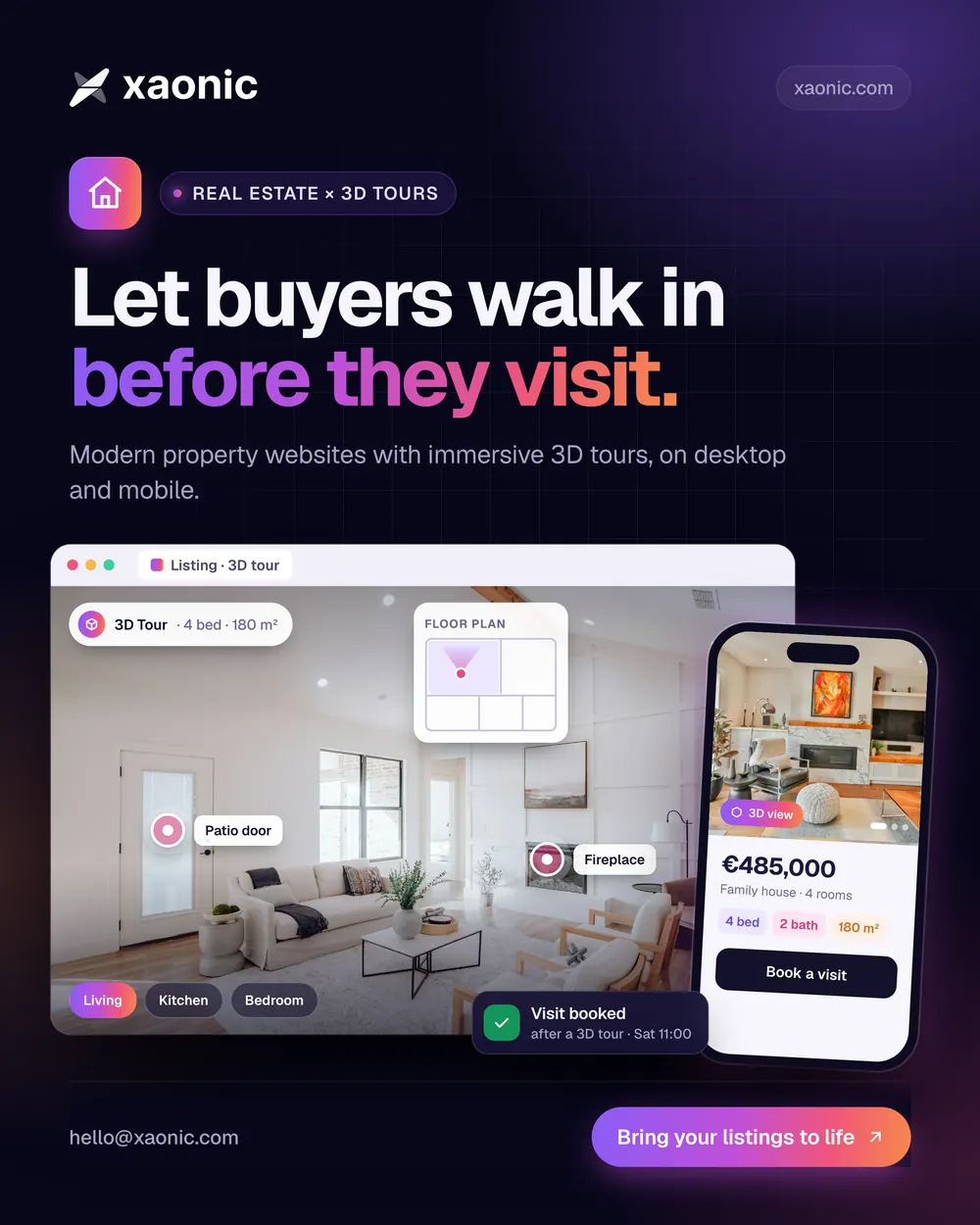
Let people walk through the place first
A photo gallery tells someone what a flat looks like. A 3D tour tells them what it would feel like to live there. That difference matters a lot more than it sounds, because it changes which viewings you get. People who walked the tour already know the layout, already know the stairs are steep, already know the second bedroom is small. They turn up to the viewing to confirm a decision, not to start making one.

This matters most when the buyer or tenant is not in the same country. In Dubai a good share of interest comes from people browsing from somewhere else entirely, and they are not flying in to look at six properties. In the Netherlands it is usually the opposite problem — the rental market moves fast enough that people want to filter hard before they commit an afternoon to viewings.
Every inquiry in one place
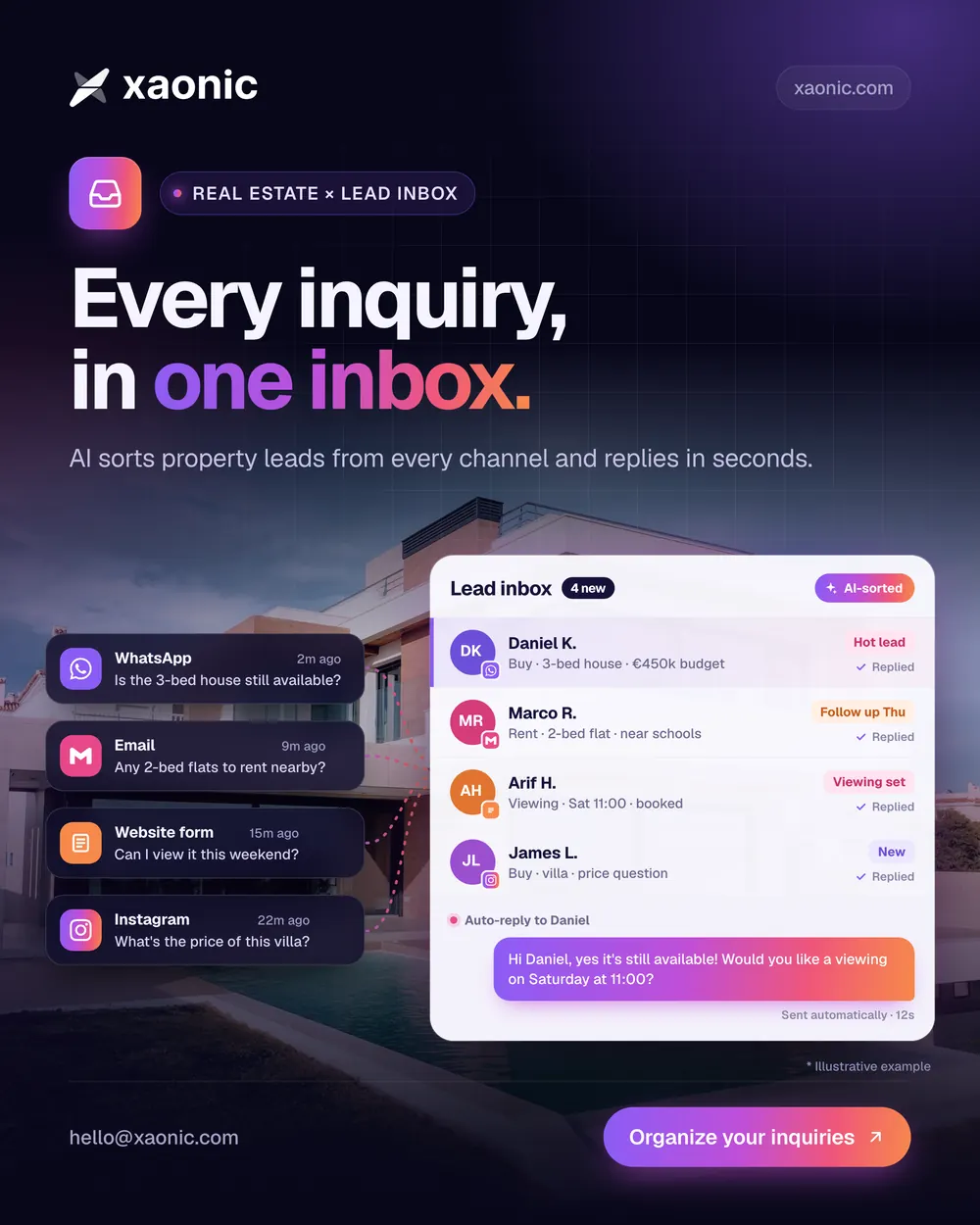
This is the one that quietly costs the most money. Inquiries arrive from the website form, WhatsApp, a portal, a phone call someone took in the car, and an email to an agent who is on holiday. None of those places talk to each other. So nobody can answer the only question that matters: who has not been followed up with yet?
What we build is a single inbox that takes all of it, works out what the person is actually looking for, and replies straight away with something useful rather than "thanks, we will be in touch". The agent picks it up from there with the full context already attached.
What the inbox should know without anyone typing it in
- Which property they asked about, and which ones they looked at before that
- Budget and move-in date, if they mentioned it anywhere in the thread
- Whether they are buying or renting — the follow-up is completely different
- Language preference, picked up from how they wrote to you
- Who on the team replied last, and when
Your team should not have to dig through old chats
Agents get asked the same forty questions. Service charges, pet policy, parking, what the deposit is, whether the rental allows sharing, what happens if the viewing is cancelled. The answers exist — in a PDF, in someone's head, in a WhatsApp thread from March.
A shared knowledge base fixes this, and it is the same system that makes the website chat trustworthy. The agent answers from your documents, not from the internet. If the answer is not in there, it says so and hands over to a person. That last part is the whole trick — an assistant that guesses is worse than no assistant, because now your team has to clean up after it.

Paperwork is where it actually stalls
Everyone focuses on getting the lead. The deal dies later, in the document stage, where nobody can tell whose turn it is. The tenant thinks they sent the payslip. The agent cannot find it. The landlord is waiting on something nobody told them about.
Ask for the right things once
The checklist depends on the deal. A Dutch rental usually needs ID and proof of income; a purchase needs different things again. Generate the list from the deal type instead of emailing a generic request.
Collect them in one link
No attachments bouncing around email. One upload page the person can finish on their phone, in parts, over several days.
Check what came in
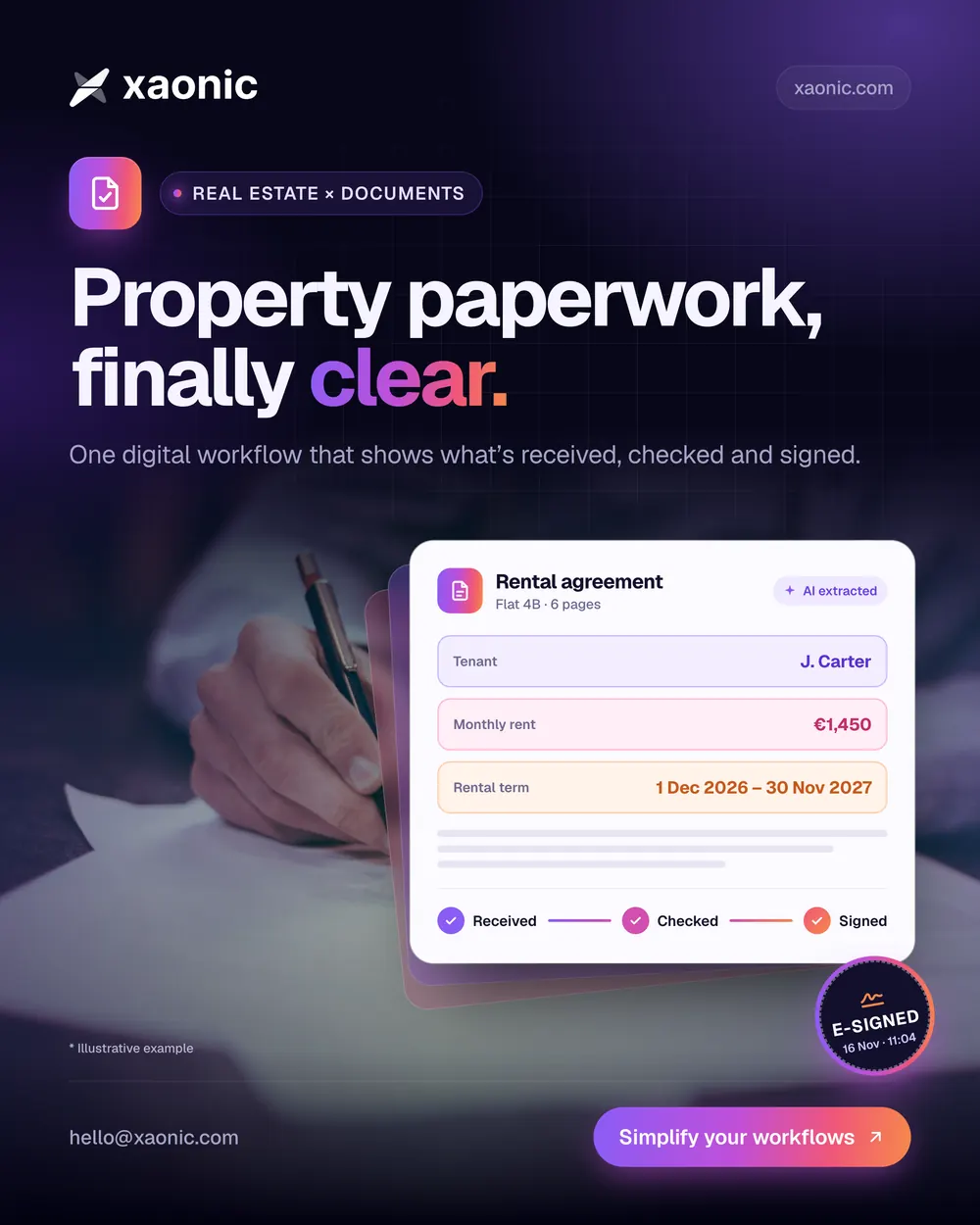
Read the document, pull out the fields that matter, and flag the obvious problems — expired ID, name that does not match, page missing from a scan.
Show everyone the same status
Received, checked, signed, waiting on you. When both sides can see the same list, the chasing emails stop by themselves.
The Netherlands and Dubai are not the same job
We work in both, and the software ends up different even when the brief sounds identical.
Netherlands
- Rentals move fast — speed of first reply matters more than polish
- Most discovery starts on the big portals, so your site is where people go to decide, not to browse
- Tenant screening documents are the bottleneck, every single time
- Dutch and English side by side, and people notice when the Dutch is machine-translated
Dubai
- A lot of interest comes from outside the country, so the tour is doing the viewing
- WhatsApp is the main channel, not email — if it is not in WhatsApp it did not happen
- Off-plan and ready property need different pages and different questions answered
- English, Arabic, Russian and Hindi in the same inbox is normal
If you only do one thing
Start with the inquiry inbox. Not the redesign. A prettier site that still loses follow-ups just loses them faster. Once you can see every inquiry and who owns it, you will know what to build next, because the gaps become obvious.
- Get every channel into one inbox, with an instant first reply that is actually useful
- Add the knowledge base, so the chat and your team answer from the same source
- Then the document workflow, because that is where deals quietly stall
- 3D tours on the listings that are hardest to shift
- Last: the redesign, now that you know what the pages have to do
If you want to see roughly this shape as a finished product, xEstate is our own real estate platform and a reasonable starting point to react to — it is easier to tell us what is wrong with something that exists than to describe what you want from scratch. The build itself is custom application development, and the agents behind it are AI services.
Questions we get asked
- Do we have to replace our current website?
- Usually not. The inquiry inbox, the chat and the document workflow can sit behind the site you already have. We would rather prove the thing works before anyone pays for a redesign.
- Will the AI agent say something wrong to a client?
- It answers from your own documents and listings, and when the answer is not in there it hands over to a person instead of guessing. You can read back every conversation it had.
- How long does the first useful piece take?
- The inquiry inbox is normally the fastest thing to get live because it does not depend on redesigning anything. Document workflows take longer, mostly because deciding what the checklist should say takes longer than building it.
- Do you work with agencies outside the Netherlands and Dubai?
- Yes. Those are just the two markets where we have done the most property work, so the examples come from there.